4.8 Tiendas de confianza 22.167 reseñas
Entrega fiable desde nuestro propio stock
Pedido hoy = entrega rápida
Envío gratuito en pedidos superiores a 99 €.
Entrega fiable desde nuestro propio stock
4.8 Tiendas de confianza 22.167 reseñas
Entrega fiable desde nuestro propio stock

Master the BBQ Maillard reaction and Grill like a Pro

If you've been BBQing for a while, you know that doneness is only half the story. You can get a steak perfectly medium rare without ever really impressing. The difference lies in what happens on the outside. That's where flavor is built. That's where you win.

The Maillard reaction is more than just “tanning”

The Maillard reaction is often simply explained as “the browning of meat,” but that does the process a disservice. What actually happens is a complex reaction between amino acids and sugars under the influence of heat. The game starts at around 140°C, but it only really comes to life when you head towards 160–180°C.

The result is not a single flavor, but a whole family of aromas: nutty, savory, roasted, sometimes almost slightly bitter in a good way. That is why a well-grilled crust is so addictive. Depth. Something you don't get with just cooking.

And importantly: this is not the same as caramelization. That is pure sugar turning brown. Maillard is more complex, rawer, more “BBQ.”

The Maillard reaction is more than just “tanning”

Where the Maillard reaction often goes wrong

Many grillers think they are “doing” the Maillard reaction, but in practice, they are mostly just steaming. You place a cold, wet piece of meat on the grill grate and expect magic. What you get is gray meat that slowly loses moisture while the temperature barely rises above 100°C.

Water is the great saboteur here. As long as there is moisture on the surface, all energy is used to evaporate it. Only then can the temperature rise and the Maillard reaction truly begin. That is why that first moment on the grill sometimes feels disappointing: nothing happens because nothing is *allowed* to happen yet.

Where the Maillard reaction often goes wrong

Building flavor is taking control of the Maillard reaction.

Once you realize this, your grilling style changes. You stop just throwing things onto the fire; you start steering.

You start even before grilling. A piece of meat that you pat dry and perhaps leave uncovered in the fridge overnight behaves completely differently on the grill. The surface is drier, the reaction starts faster, and you get that crust without having to overcook the meat.

Temperature also becomes a conscious choice. Not “hot enough,” but purposefully hot. Direct grilling gives you the explosive heat the Maillard requires, but techniques like reverse sear give you something else: control. First cook slowly, then a short, aggressive heat boost to create exactly the crust you want, without compromising on the inside.

Tip: Use a meat thermometer! Not knowing how hot the BBQ is can ruin the meat.

Building flavor is taking control of the Maillard reaction.

Small tweaks, big difference

At this level, the difference often lies in the details.

A little fat on the surface, for example. Not for frying, but to improve heat transfer. Fat makes the contact between the meat and the heat source more efficient, allowing the reaction to proceed more evenly.

Or take pH value (acidity). Something few grillers are consciously aware of, but which definitely has an influence. A slightly higher pH accelerates the Maillard reaction. That is why some rubs “color better” than others. It is subtle, but if you start playing with it, you will see the difference.

And then there is sugar. A classic pitfall. Sugar helps with browning, but on high direct heat, it can burn just as quickly. That is why sweet rubs and glazes work better during an indirect phase on the BBQ or only at the end of the session. Timing is everything here.

Small tweaks, big difference

The power of connection on the BBQ

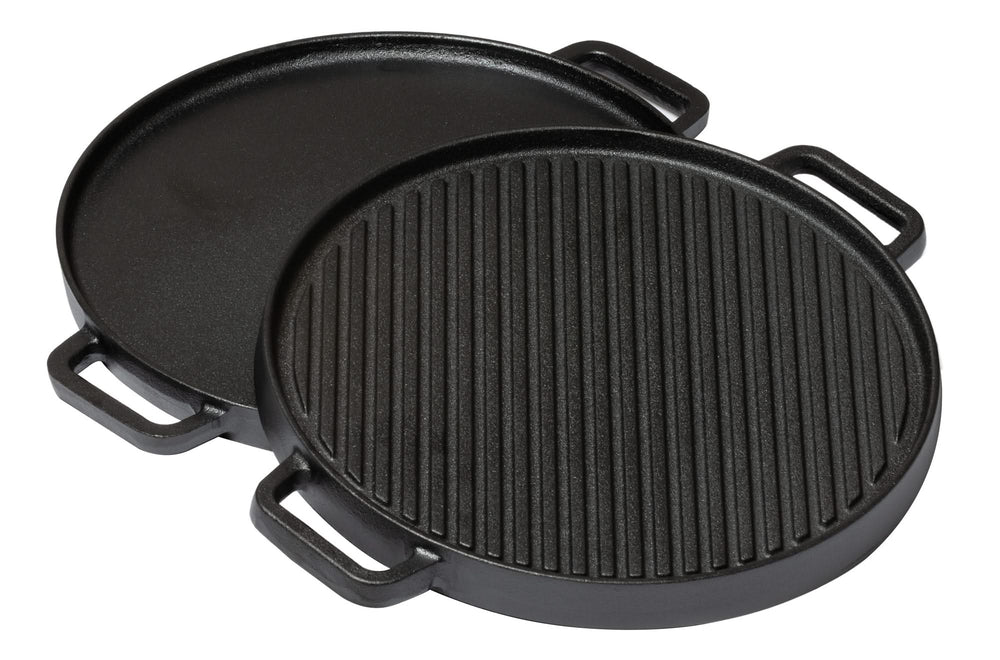
Many people underestimate how much difference direct contact makes. A grate always leaves part of the surface “hanging in the air.” That is fine, but if you really want maximum Maillard, a cast iron pan or plancha on the BBQ is a game changer.

More contact means more reaction. More reaction means more flavor. Simple.

That is also why smashburgers have such an intense crust: maximum surface area, maximum pressure, maximum Maillard.

The power of connection on the BBQ

How do you know you are on the right track with the Maillard reaction?

Not when you reach a certain core temperature, but when you see, hear, and smell it.

The sound changes from a wet hiss to a drier, more aggressive sizzle. The aroma becomes deeper, richer. And visually, you see the difference between “brown” and “developed”: a crust with character, not just color.

That is the moment you know you are building a Maillard reaction.

How do you know you are on the right track with the Maillard reaction?

Master the BBQ like a pro with Cookinglife

You can keep relying on feel, a bit of luck, and “roughly right fire”… but if you stand behind the BBQ more often, you know that this ultimately limits you. Consistency is where the difference lies between a good session and one people are still talking about weeks later.

And that is where good equipment comes into play.

Not because it looks “pretty” or because it’s part of the experience, but because it gives you control. Control over temperature, over timing, over that moment when the Maillard reaction hits exactly right. The difference between just barely no crust and a deep, flavorful crust often lies not in what you do, but in what you do it with.

With tools from Cookinglife, you aren't bringing home gimmicks, but gear built for people who take their BBQ seriously. Think of Blackwell cast iron pans that retain heat the way they should, thermometers that don't leave you guessing, and tools that do what they're supposed to do.

Because let's be honest: if you put time into technique, preparation, and choosing good meat… why compromise on your tools?

Time to take your setup to the next level. Check out our BBQ range and ensure you don't just grill, but also monitor.