Lion Sabatier Santoku Knife with Hollow Edge Idéal Provençao Olive Wood 13 cm
Forged from a single piece of steel, so sturdy and nicely balanced
Comes sharp out of the box and is easy to sharpen yourself
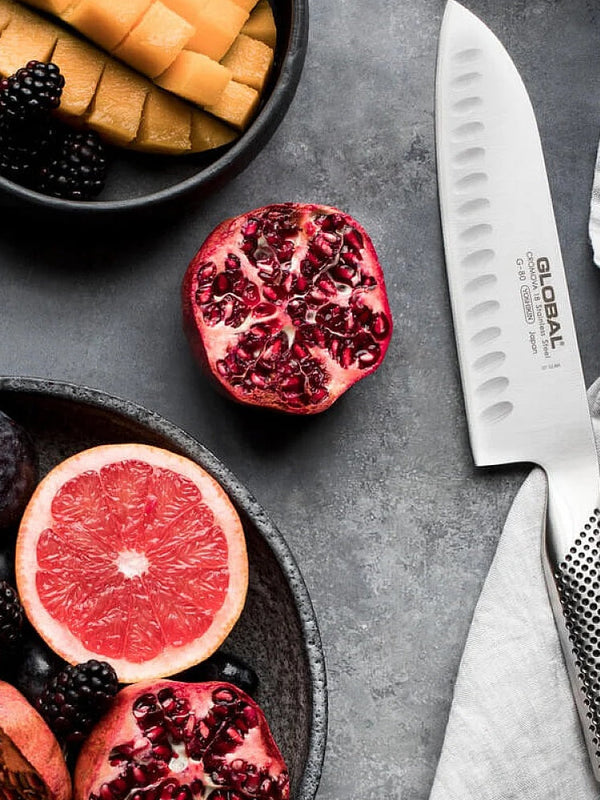
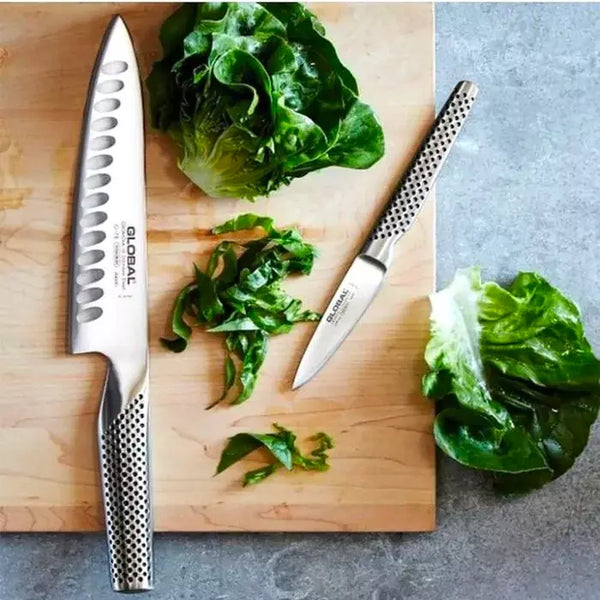
Thanks to the dimples, potatoes and fish do not stick to the blade

Pick up the knife, feel the weight just right in your hand, place it on a carrot - and before you know it, it's in thin, even slices on your chopping board. No fuss, no sticky potato slices on the blade, no unnecessary force. This is how cooking should feel. The Lion Sabatier Santoku Knife with Hollow Edge from the Idéal Provençao series is exactly that knife: Japanese cutting philosophy, French craftsmanship, and a handle made of warm Olive Wood that feels instantly familiar.
Why the Santoku will become your all-round knife
The Santoku - literally "three virtues" - was born in Japan as the ultimate all-round knife for vegetables, meat, and fish. Wide blade, straight cutting line, light and agile. Lion Sabatier has translated that Japanese logic into the French knife traditions from Thiers, the city that has been producing knife makers for centuries. The result is a knife that brings out the best of both worlds: the precision of Japanese cutting with the robustness of European craftsmanship.
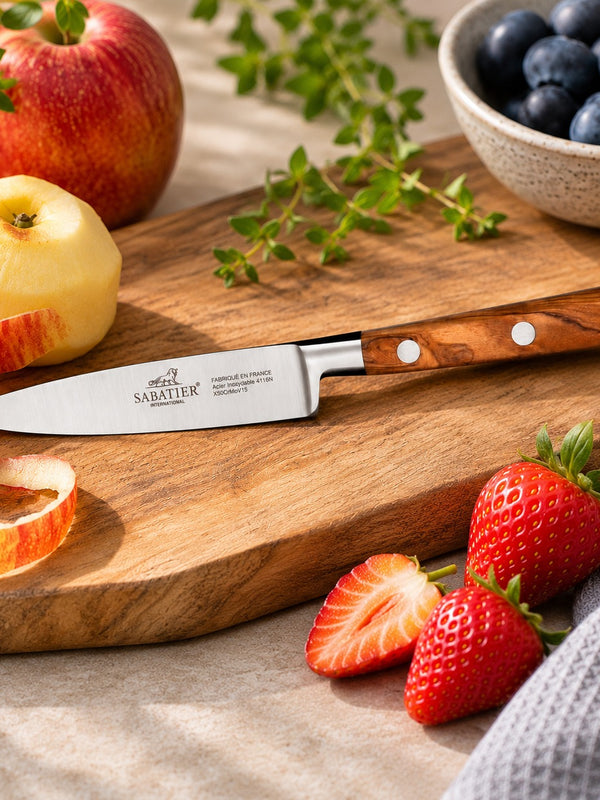
- Forged from a single piece - Blade, bolster, and tang are forged from a single continuous piece of 4116 Nitro+ Stainless Steel. This means: no loose parts, perfect balance, and a knife that lasts for generations.
- Hollows that really work - Those small hollows in the blade are not just decoration. They break the suction effect between knife and product: potato slices, fish fillet, cucumber - everything falls away from the blade instead of sliding along with it.
- Sharp out of the box - This knife comes sharp and stays that way with the right sharpening technique (European sharpening) for a long time. No sharpening time needed, just start using it.
- Olive wood handle - Three stainless steel rivets securely hold the natural Olive Wood handle in place. This wood feels warm, is naturally somewhat grease-resistant, and gives the knife its distinctive character.
- Made in Thiers - Not made in an anonymous factory, but in the French knife capital par excellence. Thiers has a reputation to uphold, and you can taste that in every knife that comes out of there.
The blade: 4116 Nitro+ steel for a reason
Not all stainless steel is the same. The 4116 Nitro+ steel that Lion Sabatier uses for the Idéal Provençao series is enriched with nitrogen. That sounds like a chemistry lesson, but the effect is very practical: the steel is harder, more resistant to corrosion, and retains its sharpness longer than regular stainless steel. With a hardness of 58 to 60 HRC, you are in the range that professional chefs choose - sturdy enough to stay sharp for a long time, but not so hard that resharpening becomes a hassle.
The blade is 13 cm long - compact enough for precision work, but ample for everyday use. Chopping vegetables, dividing a chicken breast, filleting a mango: this knife handles it all without needing to switch. And thanks to the wide, straight cutting line of the Santoku, you work more efficiently than with a classic chef's knife: you cut straight down instead of with a rocking motion. Less effort, neater results.
The handle: Olive wood with character
A knife is more than just its blade. The handle determines whether you enjoy picking up this knife every day or whether it stays at the back of the drawer. Lion Sabatier has chosen Olive Wood for the Idéal Provençao series, and that is a conscious choice. Olive wood has a distinctive grain, warm brown tones, and a uniqueness that makes every grip just a bit more special. No two pieces are exactly the same - your knife is therefore also a bit yours.
The three stainless steel rivets provide a robust connection between wood and steel, and the bolster - the piece of steel between the blade and handle - protects your hand and gives the knife its balance. You hold this knife, and it feels just right: not too heavy (100 grams total weight), not too light, perfectly balanced.
A small but important note: wash this knife by hand and dry it immediately. Olive wood and the dishwasher are not friends. Hot water and aggressive cleaning agents can damage the wood and can also dull the steel. A quick rinse, wipe dry, and you're done. That's all this knife asks.
How to get the most out of your Santoku knife
The Santoku was born for the Japanese technique of cutting straight down - without the rocking motion you use with a European chef's knife. That technique gives you thin, even slices and prevents your vegetables from being crushed instead of cut. Practice with cucumber, courgette, or leek: you'll see the difference immediately.
💡 Tip from Cookinglife: Soak your onion or potato briefly in cold water before cutting. In combination with the hollows in the blade, nothing will stick anymore. Cutting then goes so smoothly that it becomes almost meditative - no joke.
For resharpening, use a European sharpening stone or sharpening steel at an angle of 20 to 25 degrees. That angle matches the European cutting profile of this knife and keeps the sharpness optimal. Sharpen regularly instead of waiting until the knife is dull - then resharpening takes five minutes instead of half an hour.
Specifications
- Brand: Lion Sabatier
- Collection: Idéal Provençao
- Type: Santoku Knife with Hollow Edge
- Blade length: 13 cm
- Total length: 23.5 cm
- Weight: 100 grams
- Blade material: 4116 Nitro+ steel (nitrogen-enriched stainless steel)
- Handle material: Olive Wood with 3 stainless steel rivets
- Hardness: 58-60 HRC
- Sharpening method: European (20-25 degrees)
- Dishwasher safe: No - wash by hand and dry immediately
- Country of origin: France (Thiers)
- Colour: Silver / Brown
In the package
- Lion Sabatier Santoku Knife with Hollow Edge Idéal Provençao Olive Wood 13 cm
If you are looking for a knife that elevates your daily cooking pleasure - without fuss, without hassle, just working - then this is your knife. Add the Lion Sabatier Santoku Knife Idéal Provençao to your collection and discover for yourself what good tools do for your cooking enjoyment.