4.8 Trusted Shops 22.167 reviews
Free Shipping from 149,-
1,000,000+ satisfied customers preceded you
Celebrating our 10th anniversary this year
Free Shipping from 149,-
4.8 Trusted Shops 22.167 reviews
Free Shipping from 149,-

HACCP cutting boards: how to work safely with color codes

Put a cheat sheet with the color codes in your kitchen until you know them by heart. After a week you'll reach for them automatically.

What do the colors mean exactly?

The HACCP system uses fixed color rules that you see everywhere in professional kitchens. Red is used for raw meat, blue for raw fish, yellow for poultry and white for dairy and bread. Green is sometimes used for fruit and vegetables. That layout isn't random: the colors prevent you from accidentally using the same board for ingredients that don't belong together. Especially for poultry and raw meat that distinction is crucial for food safety. Just remember the codes as a system, and it becomes second nature.

What do the colors mean exactly?

Why plastic and not wood?

For HACCP use you should always choose plastic boards rather than wood. Wood is porous: moisture, bacteria and food particles get into the fibers, even if the board looks clean. Plastic doesn't have those issues. The surface is closed, easy to clean and most boards can safely go in the dishwasher. At high dishwasher temperatures bacteria are reliably killed. A wooden board is lovely for bread or cheese, but raw meat and fish belong on plastic.

Why plastic and not wood?

Start with the right set

You don't have to buy every color straight away if you don't need them all. First look at what you cook most often. If you regularly cook meat and fish, red and blue are a must. If you often prepare poultry, add yellow. White for dairy and bread is useful if you also use a board in the morning for slicing bread or cheese. If you have all of those, you'll be fully hygienic and always know exactly which board to grab.

Start with the right set

How to use the boards in practice

Always place the board on a stable, non-slip surface. A damp tea towel under the board prevents it from sliding while you cut. Work consistently: grab the color that matches what you're cutting and put it aside immediately afterwards. Never mix two different boards for the same ingredient and don't just rinse a board quickly to use it for something else. That quick rinse doesn't remove bacteria. Put the board straight into the wash after use.

How to use the boards in practice

Cleaning: do this after every use

After each use wash the board immediately with hot water and dish soap, or put it in the dishwasher on a program of at least 60°C. Don't wait until after dinner: bacteria from raw meat or fish multiply quickly at room temperature. Let the board dry completely before storing it, because a damp board in a cupboard is a breeding ground. If you're hand-washing the board, use a stiff brush to reach the cut grooves well.

Cleaning: do this after every use

How to store them

Store your boards upright in a rack or a separate drawer so they don't lie on top of each other and can dry properly. Boards stored flat and stacked dry poorly and can develop mold or retain odors. A board rack keeps them sorted by color, which also makes it immediately clear in the cupboard which one you need. That way you keep your HACCP system tidy and hygienic even outside of cutting time.

How to store them

When should you replace a board?

Plastic boards last a long time, but not forever. As soon as you see deep cut grooves that can't be cleaned anymore, even in the dishwasher, it's time for a new one. Bacteria take up residence in those grooves and remain even after washing. Discoloration or a persistent smell after washing are also signs that the board is no longer doing its job. A new board costs little and gives you full confidence again. Quality here also means: replace on time.

When should you replace a board?

Related howto's

The HACCP color-code system was developed for professional kitchens, but it works just as well at home. Each color stands for a specific product group: red for meat, blue for fish, yellow for poultry and white for dairy and bread. By consistently using the same board per ingredient you prevent bacteria from being transferred from raw to ready-to-eat food. That's not an unnecessary luxury — it's simply smart food safety.

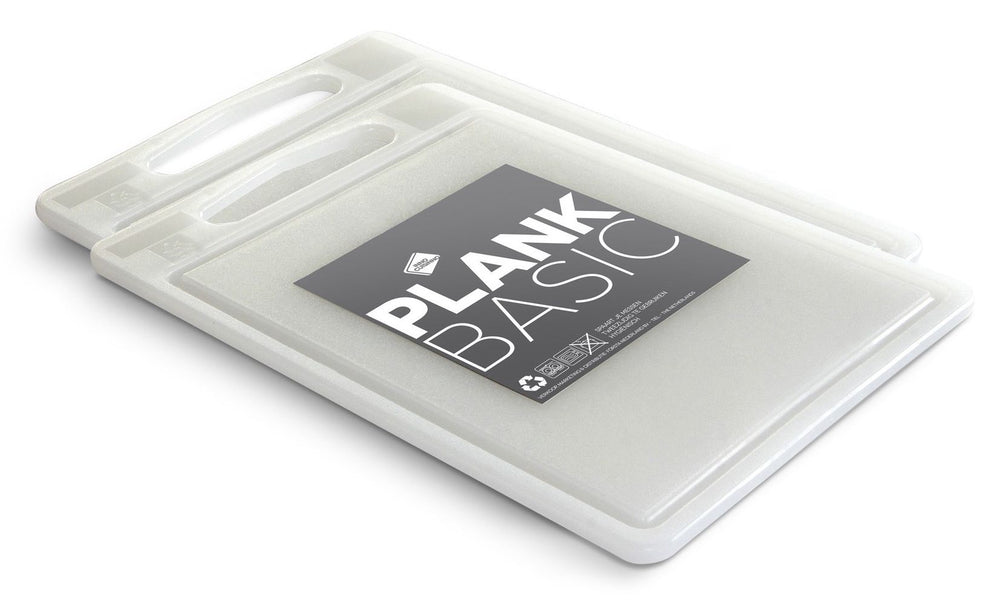
Plastic HACCP cutting boards are popular because they withstand heavy use and can go in the dishwasher. That keeps them thoroughly clean without spending much time on them. Choose boards with a solid thickness so they stay stable while cutting. With a complete color-coded set you work hygienically by design, cook with more confidence and enjoy the result at the table.