4.8 Trusted Shops 22.167 reviews
Free Shipping from 149,-
1,000,000+ satisfied customers preceded you
Celebrating our 10th anniversary this year
Free Shipping from 149,-
4.8 Trusted Shops 22.167 reviews
Free Shipping from 149,-

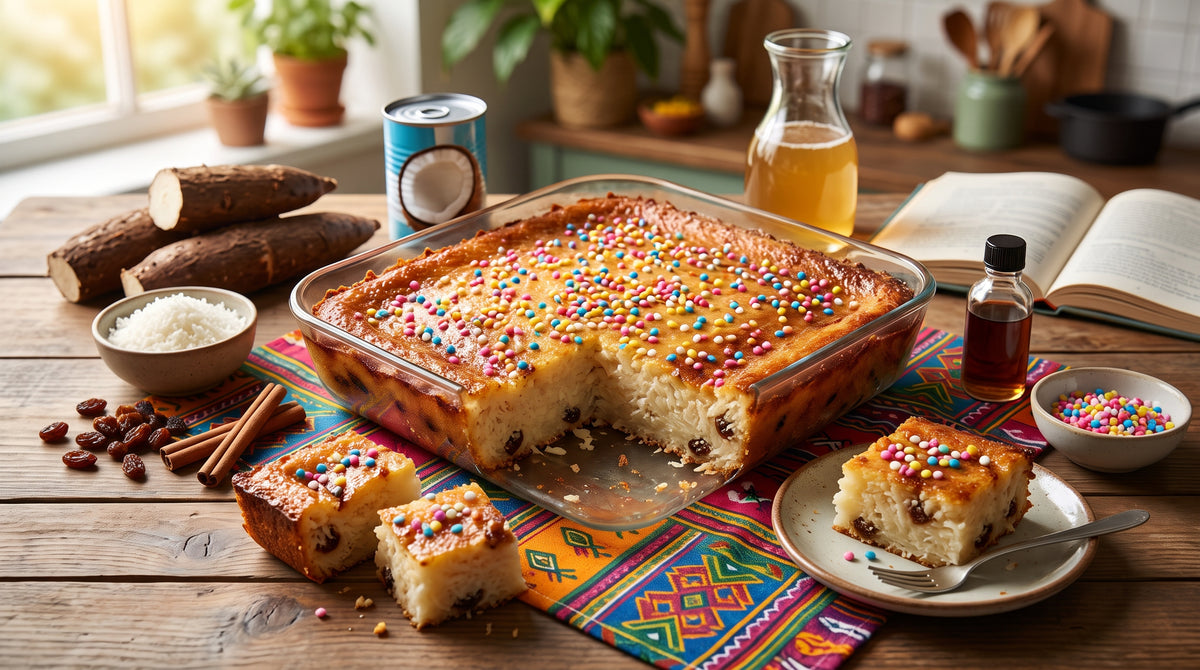
Bojo (Surinamese cassava cake)

Moist cake of grated cassava and coconut with raisins, rum and cinnamon.

Bojo (Surinamese cassava cake)

Moist cake of grated cassava and coconut with raisins, rum and cinnamon.

Bojo is a Surinamese cake you find at every birthday and celebration. Instead of flour you use grated cassava and coconut, which makes the cake naturally gluten-free and gives it a dense, moist texture that sits somewhere between cake and pudding. Raisins soaked in rum, vanilla, cinnamon and a little almond essence create the distinctive flavor.

The batter is ready in fifteen minutes, especially if you use frozen grated cassava and coconut from the Asian grocery. Then the oven does the work. The only thing you need is patience: bojo must cool completely before you cut it, otherwise it will fall apart. It’s at its best a day later.

  • Total: 1 hour 30 min
  • Servings: 16 pieces
  • Kitchen: Surinamese

Recipe

Bojo (Surinamese cassava cake)

Bojo is a Surinamese cake made without flour, from cassava and coconut. Dense, moist and full of flavor thanks to raisins, vanilla and a dash of rum.

Course Dessert
Kitchen Surinamese
Servings 16 pieces

Preparation time

Preparation time 30 min
Time in oven 1 hour
Total 1 hour 30 min

Equipment

  • Springform Pan 28 cm
  • Mixing bowl
  • Hand mixer
  • Clean tea towel
  • Parchment paper
  • Spatula

Ingredients

  • 750 g frozen grated cassava
  • 150 g grated coconut
  • 175 g sugar
  • 3 eggs
  • 115 g butter
  • 250 ml coconut milk
  • 100 g raisins
  • 50 ml dark rum
  • 2 tsp vanilla extract
  • 1 tsp cinnamon
  • 1 tsp almond essence
  • 1 pinch of salt

How to make bojo?

  1. Soak the raisins in the rum for 15 minutes. Let the cassava thaw and squeeze it firmly in a clean tea towel so most of the moisture is removed.
  2. Preheat the oven to 175 °C. Grease a 28 cm springform pan with 15 g of the butter and line the bottom with parchment paper. Melt the remaining butter in a small pan.
  3. Beat the eggs with the sugar for 3 minutes until light and creamy with a hand mixer. Stir in the coconut milk, the melted butter, the vanilla extract, the almond essence, the cinnamon and the salt.
  4. Fold the cassava, the grated coconut and the rum-soaked raisins into the egg mixture until you have an even batter. Pour it into the pan and smooth the top.
  5. Bake the bojo for 60 minutes in the middle of the oven at 175 °C, until the top is deep golden brown and a skewer comes out clean.
  6. Let the bojo cool completely in the pan. Release the sides and cut the cake into small squares.

Squeeze the cassava well: cassava that’s too wet gives a gummy bojo that won’t cook through in the middle. Grated cassava and grated coconut are usually in the freezer section of the Asian grocery. If you only find dried shredded coconut, soak it for 10 minutes in the coconut milk first. If you’re baking for children and want to avoid alcohol, replace the rum with the same amount of orange juice. Use almond essence sparingly, as too much will overpower the other flavors. Only cut the bojo when it is completely cold; warm it’s still too soft and crumbles. Wrapped in foil the cake keeps for four days in the fridge and the flavor only improves. You can freeze portions for up to two months.

Cut bojo into small squares and diamonds — the cake is rich, so a small piece is enough. Arrange them on a platter with coffee and tea or serve them at a birthday alongside other sweet bites. It’s best at room temperature, so remove it from the fridge half an hour before serving. As a dessert it pairs well with a scoop of vanilla ice cream and some toasted coconut. Bojo is also handy to take along because it stays firm and doesn’t dry out. If you enjoy Surinamese sweets, try dawet, a sweet coconut drink, and bakabana, fried plantain. A glass of ginger beer provides a fresh, spicy contrast.